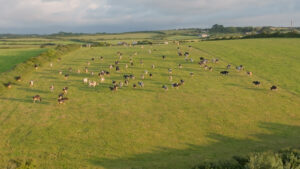
Irish dairy farming and the challenge of nitrogen runoff
Ireland’s rainfall powers its grass-based dairy system but raises nitrogen runoff risks. How are farmers protecting both productivity and water quality?
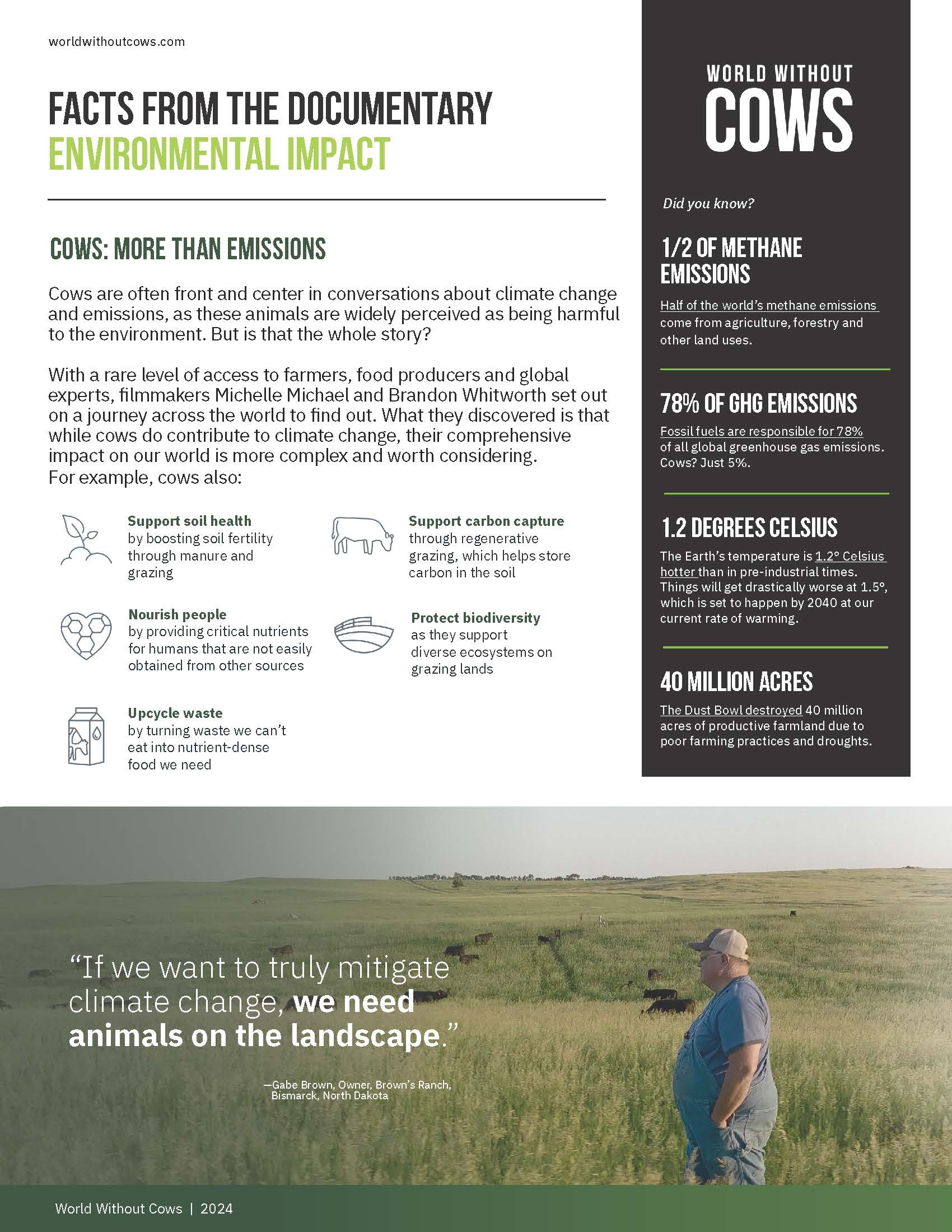
Cows are often front and center in conversations about climate change and emissions, as these animals are widely perceived as being harmful to the environment. But is that the whole story?
With a rare level of access to farmers, food producers and global experts, filmmakers Michelle Michael and Brandon Whitworth set out on a journey across the world to find out. What they discovered is that while cows do contribute to climate change, their comprehensive impact on our world is more complex and worth considering.
For example, cows also:
Key Takeaway: While cattle account for approximately 5% of direct global greenhouse gas emissions, well-managed livestock systems actively support carbon sequestration, topsoil restoration, and nutrient upcycling.
Rangelands and pasture soils act as critical carbon sinks. Through rotational grazing, plant root systems are stimulated to pump organic carbon deep into the soil profile:
Net-Negative Carbon Case Studies: Long-term ecological research at Archbold’s Buck Island Ranch in Florida demonstrates that managed subtropical pastures can sequester more atmospheric carbon annually than the cattle herds emit.
Integrated Crop-Livestock Systems: Combining crop rotation with cattle grazing enhances soil organic matter, improving water retention and pulling atmospheric carbon into the soil matrix.
According to UN FAO data, roughly 80% of global livestock emissions originate in developing regions.
Productivity and Land Management: Targeted improvements in animal genetics, nutrition, and pasture management in developing nations yield dramatic reductions in methane intensity per unit of meat or milk produced.
Context-Specific Sustainability: Sustainable food production relies on localized solutions tailored to specific biomes, land types, and community resources.
Ruminant livestock possess a unique digestive capability to process cellulose-rich plants that humans cannot digest:
Biomass Upcycling: Cattle turn agricultural byproducts and non-arable forage into high-density protein and bioavailable micronutrients.
Natural Soil Fertility: Manure deposition restores essential nitrogen, phosphorus, and microbial biodiversity to agricultural soils, reducing reliance on synthetic fertilizers.
Methane from cattle is part of a naturally circular biogenic carbon cycle, unlike CO₂ from fossil fuels which adds new carbon to the atmosphere.
Evaluating livestock climate impact depends heavily on accounting for methane’s short atmospheric lifespan (~10 to 12 years).
The Biogenic Carbon Cycle: Photosynthesis draws atmospheric CO₂ into plants. Cattle consume these plants and release a portion as methane. After roughly a decade, that methane breaks down back into CO₂ and water, returning to plants in a closed loop.
GWP100 vs. GWP Accounting:* Traditional GWP100 metrics treat methane like persistent CO2, overstating the warming effect of stable cattle herds. The updated GWP metric* accurately reflects that a constant herd size does not drive additional global warming.
Fossil vs. Biogenic Emissions: Fossil fuels extract ancient underground carbon and inject new, cumulative gases into the atmosphere, whereas biogenic methane recycles existing atmospheric carbon.

Ireland’s rainfall powers its grass-based dairy system but raises nitrogen runoff risks. How are farmers protecting both productivity and water quality?

How third-generation Irish dairy farmer Niall Moore is farming for the next generation
From bog butter to global export powerhouse
Why the global warming potential of methane emissions from cattle production needs a closer look
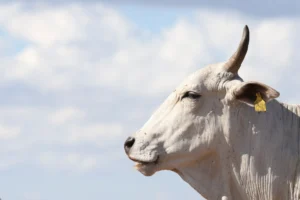
At COP30, the world’s eyes are on Brazil, and the cattle ranchers leading a global transformation.
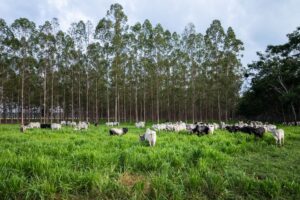
Restoring 40 million hectares of pasture could feed billions and ease pressure on the Amazon. Is the world paying attention?
As climate change intensifies and the world’s population continues to grow, the pressure on our global food production system mounts. You can play an active role in shaping a more sustainable planet for future generations. Fill out the form below to learn more about how you can partner with us.